Why Super Mario Galaxy Still Holds Up
Nearly two decades on, Galaxy's level design, physics, and pacing still read as modern. The design choices that made it feel timeless.
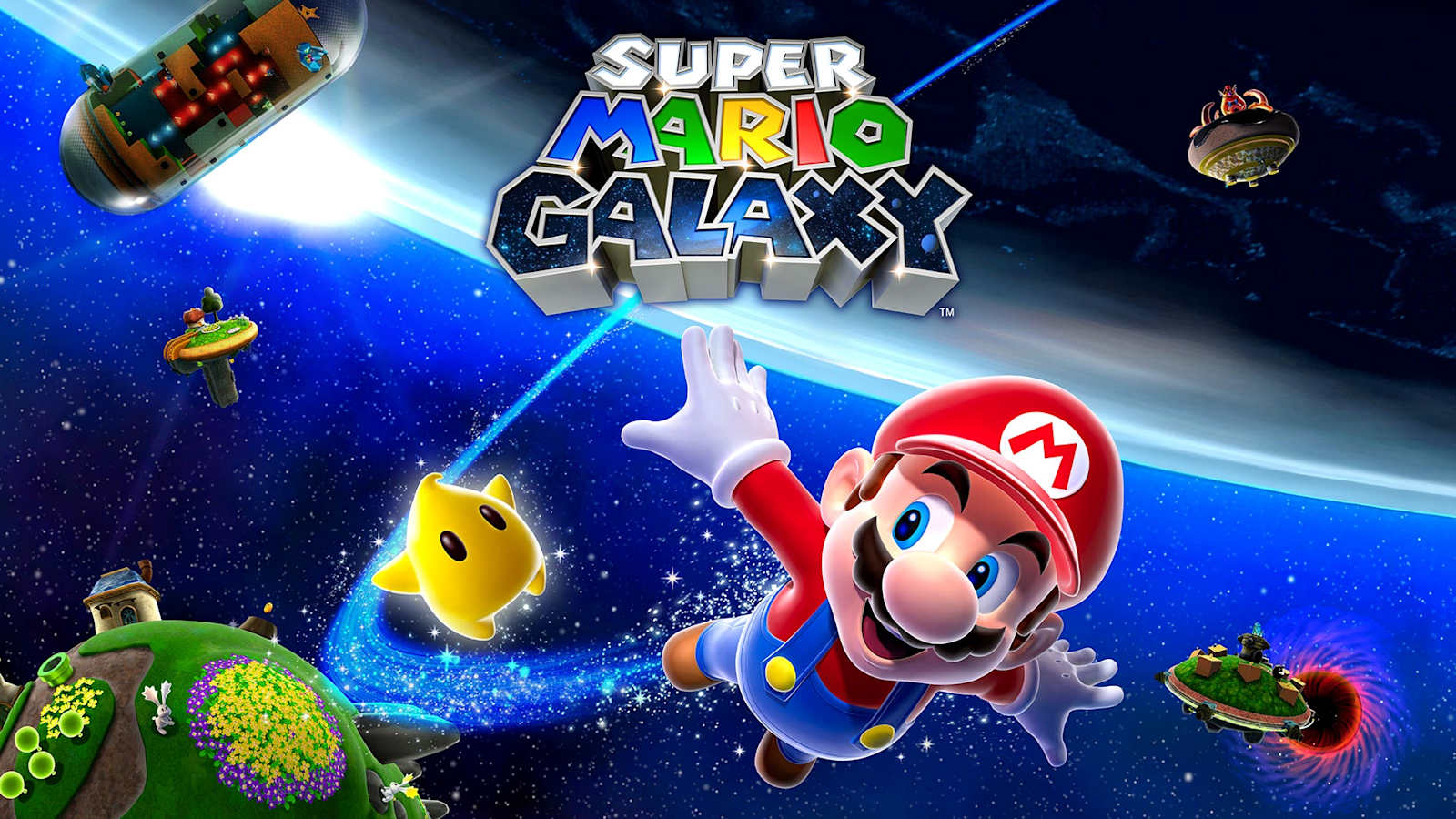
Super Mario Galaxy came out in 2007. Most 3D platformers from that era do not hold up — their controls feel loose, their cameras fight the player, their levels sprawl in ways that modern design would tighten. Galaxy sidesteps almost all of that, and the reason is more interesting than "Nintendo is just better at it."
The Physics Decision
Galaxy's central design idea — spherical levels, custom gravity per surface — sounds like a gimmick. It isn't. It's a way to keep levels small and dense without making them feel small. Every planetoid is its own puzzle. The camera never has to track a huge open space, because the "space" is always a surface you're on. That's why the game still feels legible nearly two decades later: the framing problem of 3D platforming was solved sideways.
Pacing That Doesn't Pad
Galaxies are short. Most take five to ten minutes. The game doesn't ask you to revisit the same zone to grind stars — each mission within a galaxy is usually a new traversal through the same terrain with a different objective. That's a pacing decision that modern open-world platformers have mostly forgotten. Odyssey carried some of it forward. Wonder went even further.
The Orchestra, Obviously
It's not a point to skip past. A live orchestral soundtrack was rare in 2007 and is still rare now. Every galaxy has its own motif. The music carries the tonal shifts — wonder, tension, triumph — in a way that holds the pacing together even when individual missions are short.
What Still Doesn't Age
- Momentum: the jumps feel right. The turning feels right. This is the hardest thing to get right in 3D platformers and the easiest to notice when it's wrong.
- The central hub: the Comet Observatory remains one of the best platformer hubs ever made — it's a level, not a menu.
- Visual confidence: bold colour, lots of negative space, almost no visual noise. It still looks like a modern Nintendo game.
What To Play After
Galaxy 2 is the denser sequel — more ideas, less connective tissue. Odyssey is the modern descendant, sandbox-first. Wonder is the closest 2D cousin to Galaxy's "every level a new idea" pacing. If Galaxy is new to you, start with the original — the hub structure matters.
Follow GamesOracle on YouTube
Watch more gaming reviews, retrospectives, and franchise coverage on YouTube.
Franchise Hub
Explore the Mario franchise →
Nintendo's flagship platformer franchise — the most consistently well-made game series in the industry, across 2D, 3D, spin-offs, and beyond.
Related Articles
Mario Kart World — Review
The first all-new Mario Kart in a console generation. Open-world traversal, redesigned items, and a release that has to follow the best-selling kart racer ever made.
Metal Gear Solid — The Legacy of Tactical Espionage Action
How Hideo Kojima's stealth masterpiece changed gaming forever, and what its legacy means for the medium today.
The GamesOracle Dispatch
One email a week. The best of what we published, played, and thought about.